Mastering the Deadlift: Biomechanics for Unprecedented Strength
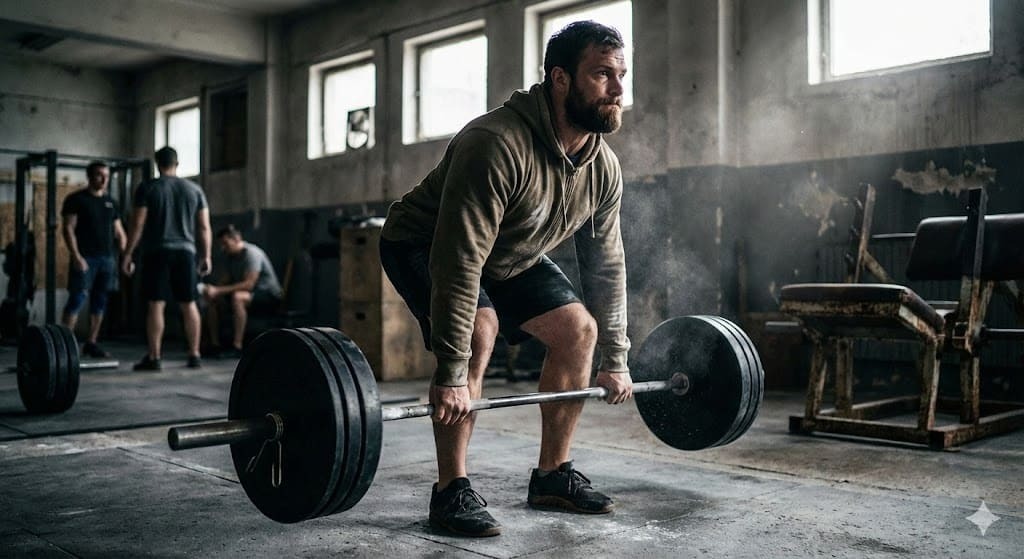
The Ultimate Test of Raw Power
If the squat is the king of barbell exercises, the deadlift is undeniably the emperor. It is the purest test of raw human strength: a heavy, inanimate object rests dead on the floor, and your objective is to pick it up. There is no eccentric phase to build bounce, no momentum to carry you through the sticking point. Just you, gravity, and the iron.
However, the deadlift is far more than just a test of back strength. It is a complex, synchronized engagement of the entire posterior chain—from the calves and hamstrings up through the glutes, erector spinae, lats, and traps. In 2026, advancing sports science has given us a deeper understanding of the biomechanics required to move maximal weight while minimizing injury risk. This guide breaks down the deadlift layer by layer, equipping you with the knowledge to pull unprecedented numbers.
1. The Physics of the Pull: Levers and Moment Arms
To master the deadlift, you must first understand the physics governing it. The body acts as a system of levers designed to move a load against gravity.
The Center of Mass (COM)
When setting up for the deadlift, the combined Center of Mass of your body and the barbell must remain balanced over your mid-foot. If the bar drifts forward, the moment arm between the barbell and your lower back increases immensely.
- The Rule of Proximity: The barbell must stay intimately close to your body throughout the entire pull. It should drag up your shins and your thighs. A bar that is just one inch forward can place hundreds of pounds of unnecessary shearing force on your lumbar spine.
Hip Hinge vs. Squatting the Weight
A common beginner mistake is trying to "squat" the deadlift by dropping the hips too low.
- The deadlift is a hip hinge movement. The objective is not to bend the knees as much as possible, but to load the hamstrings and glutes by pushing the hips back.
- When your hips are too low, your knees get in the way of the bar path, forcing the bar to swing out and away from your COM. Your hips should be higher than your knees but lower than your shoulders.
2. The Setup: Engineering the Perfect Start Position
A missed deadlift in 2026 isn't usually the result of being too weak; it's the result of a bad setup. The moment the bar leaves the floor, your fate is sealed.
Stance and Foot Placement
- Conventional Deadlift: Place your feet roughly shoulder-width apart, toes pointed slightly out (around 10-15 degrees). The bar cut your foot perfectly in half (over the mid-foot).
- Sumo Deadlift: Adopt a wide stance with toes pointed outwards more aggressively (30-45 degrees). This shortens the range of motion and creates a more upright torso angle, decreasing lower back demand but requiring significant hip mobility. Both styles are valid; you must choose the one that fits your anthropometry (bone lengths).
The Grip
- Double Overhand: Best for building grip strength but will ultimately limit the amount of weight you can pull once the loads get heavy.
- Mixed Grip (One over, one under): Prevents the bar from rolling out of your hands, allowing you to pull maximal weight. However, it can create asymmetrical shoulder and back development over time.
- Hook Grip: The gold standard in 2026 for elite lifters. Wrap your fingers over your thumbs. It is excruciatingly painful at first, but it provides the ultimate security without the asymmetry of a mixed grip.
"Pulling the Slack"
This is the most critical cue in deadlifting. Before you push the floor away, you must create maximum full-body tension.
- Grab the bar, set your grip, and pull up on the bar until it clicks against the plates.
- Flex your lats as if you are trying to squeeze oranges in your armpits. This engages the upper back and locks the spine into a rigid position.
- If you go from zero tension to 100% force instantly (yanking the bar), your spine will flex, and you will lose structural integrity.
3. The Execution: Pushing the Floor Away
Many lifters conceptualize the deadlift as a "pull." This mental model often leads to hitching and lower back rounding. Instead, think of it as a push.
Phase 1: The Push (Floor to Knees)
- With the slack pulled and your core braced, drive your feet into the floor as if you are trying to leg press the earth away from you.
- Your quadriceps are the primary movers here. The angle of your back to the floor should remain strictly constant until the bar reaches your kneecaps.
Phase 2: The Wedge (Knees to Lockout)
- Once the bar passes your knees, the mechanics change. Now, it is a pure hip extension.
- Violently drive your hips forward to meet the bar. Squeeze your glutes together as hard as possible.
- Do not hyperextend your lower back at the top. A correct lockout happens when the knees and elbows are straight, the chest is up, and you are standing tall, supported entirely by the glutes.
4. Breathing and Bracing (Intra-Abdominal Pressure)
You cannot shoot a cannon from a canoe. If your core is soft, the force generated by your legs will not transfer to the barbell. The secret to a safe, monstrous deadlift is Intra-Abdominal Pressure (IAP).
- The Valsalva Maneuver: Before the pull, take a deep breath into your belly—not your chest. Expand your stomach 360 degrees, pushing out against your lifting belt (if applying one). Hold this breath for the entire duration of the rep, from floor to lockout. This creates a high-pressure cylinder that protects the spine against sheer forces.
5. Identifying and Eliminating Sticking Points
Even with perfect form, everyone has a weak link. In 2026, progressive strength programming uses specific accessory work to target these sticking points.
Sticking Point: Off the Floor
If you can't break the bar off the ground, your quads are likely weak, or your starting position is poor.
- Solution: Implement Deficit Deadlifts (standing on a 1-2 inch block) to increase the range of motion and demand on the quads. Add Pause Deadlifts (pausing one inch off the floor) to build starting strength.
Sticking Point: At the Knees
If you stall mid-shin or at the knee, you are likely losing positioning or lacking back strength.
- Solution: Block Pulls or Rack Pulls overload the top half of the movement. Barbell Rows and Pendlay Rows will build the lat thickness required to keep the bar close during the transition.
Sticking Point: The Lockout
If you can get it past your knees but can't finish the lift, your glutes are failing to extend the hips.
- Solution: Implement heavy Romanian Deadlifts (RDLs) and Barbell Hip Thrusts to isolate and strengthen the gluteal muscles and hamstrings.
6. Managing Systemic Fatigue
The deadlift is the most neurologically taxing exercise in existance. It demands maximum recruitment from the Central Nervous System (CNS).
- Frequency: Unlike squats or arm isolation, you cannot deadlift heavy three times a week. Most elite programs program the heavy deadlift just once every 7 to 10 days.
- Volume vs. Intensity: Keep the volume relatively low (e.g., 1-2 heavy top sets of 3-5 reps). The risk-to-reward ratio of performing high-rep, exhausting deadlifts is terrible. Save the volume for your accessory work.
Summary: Respect the Iron
The deadlift teaches patience, resilience, and respect. It exposes every weakness in your physical armor. By rigorously applying these biomechanical principles—optimizing your setup, treating the lift as a "push," mastering IAP, and intelligently managing your CNS fatigue—you will transform your deadlift from a frustrating hurdle into your signature feat of strength. Use your RepLog to track every heavy session, film your sets for form review, and watch the plates pile up on the bar.
Ready to track smarter?
RepLog helps you implement everything you just learned with intelligent workout tracking.
Download RepLog Free